Pages

Saturday, June 26, 2010

A little bit "French"!


"Die Winkel op Paternoster" (it translates as : The Shop at Paternoster) is probably the most photographed building in this postcard- pretty town.

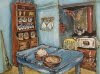
I decided to focus on some interesting detail and liked this French-looking corner where the three red shapes met. The red objects are: the barn door, the frame of the blackboard menu, and the red dragon on the antique enamel signboard (Mobiloil). I call this scene a little bit French because Afrikaans-speaking families have French genes among others!

Wow, I realize now that I am o-o-o-o-old enough to remember village shops with enamel signs! The rust from the screws would run down the paint of the outer walls! At about five years of age I carried our freshly-laid eggs in a brown-paper bag to a shop called "Driewald Kontantwinkel". The shop owners gave us credit for Mom's lovely eggs!

Reminiscing aside, this shop at Paternoster is a 'must visit'. Who can resist West Coast delicacies, home baked confectionery and colourful preserves? The shop brims with nostalgic items like enamelware and old porcelain. A coat rack with hats.....postcards..... a feast for the eyes!

Wednesday, June 23, 2010

Folks and fish #4


In the last of this 4-part series, I stopped some anglers who were on their way to a high rocky outcrop. While I asked questions of one guy, his friends cast some lines into the rushing surf, prior to climbing to their favourite rock. How lonely it must be sitting there on the cold rocks! One needs such patience! Somewhere I read that God would not detract from a person's years on earth the time he spent fishing!

The main aim of these men were to catch fish for the pot. I wish I can visit one of these homes to see the wonderful local recipes being created in the West Coast kitchens. The fish found here, close to Kabeljoubank are Cape Salmon (Geelbek), Yellowtail (Geelstert), Kabeljou (Cob) and the evasive and protected National fish of South Africa, called Galjoen. "What if there are no bites?" we asked. The old man laughed: " Then we must buy some Snoek!" he said. Yup, that will surely be better than arriving home with no fish at all to the wife waiting and ready with onions and skillet!

What I enjoyed about this painting was the pattern of vertical lines! Vertical lines are a symbol of masculinity(like soldiers with swords, like trees in a forest) I had to paint these lines freehand and had one chance to do them, they are shaky and so they will remain. Today, I am also showing the complete set which now resides in a city far from here.

Monday, June 21, 2010

Folks and Fish #3


Of course we have already learnt a lot about the bokkom industry on the West Coast. First I painted a little row of bokkoms being salted and hung out to dry. Then the second stage was shown where they were peeled and made ready to be eaten.(Remember my homemade bread, apricot preserve and slivers of salty bokkoms served with coffee?)

This painting, third in the set "Folks and Fish", shows the largest of the bokkom drying barns on the banks of the Berg River at Velddrif where thousands of little mullet fish can be seen any day of the week. The bokkoms take 8 days to dry, depending on the weather and air circulation Janine is the petite lady who has managed this factory with its large salt bins and many hanging lathes for more than 12 years. This quietly dignified lady had me spellbound as she pointed out the many aspects of this industry which provides both jobs and food for the local people.

It would be easy to export the dry snacks with their sweet fishy smell or even introduce them to Johannesburg and other South African cities. But of course, it is a born and bred local taste that takes a bit of getting used to. As Janine stands there with her old-fashioned set of scales, she probably sees the same customers day by day.

Thursday, June 17, 2010

Folks and Fish # 2


From my studio I can see Kabeljoubank where the snoek hang out to dry with Table Mountain in the distance. If the motorists racing past on the R27 will only spend 15 minutes to drive to this rocky outpost, they can observe a centuries old West Coast custom of drying salted fish in the open air and seabreeze.

My models are not the owners of the fish, but are helping to turn and guard them for a small daily fee. On my first visit two years ago they were timid in front of the camera and extremely shy of the easel and paints set-up. Now, for a small modelling fee, they hold out the snoek so I can observe the lovely pinks of the wet fish and the blue and turquoise colours when the sun reflects the oil in the fish. They remember me from before and even tell my what I forgot to take note of the previous visit.

The painting, I think, is my least favourite of the "Folks and Fish"set of four because of the bright sunlight and deep shadows. I much prefer the cloudy moods of the West Coast for my paintings. Readers can find more about snoek in two of my older posts: Snoek drying on the fence, and Smoorsnoek prepared in a country kitchen.

Sunday, June 13, 2010

Folks and Fish # 1


This is the first painting of a set of four works, of which I have shown the preparatory sketches in the previous post. Working at them I am conscious of the poverty of the area and the plight of those brave souls, the sustenance fishermen, who face the sea day by day.

My model shows two of the four crayfish he is allowed to catch for his daily quota during the crayfish season. It will be safer for the men to catch the monthly allowance in one single day, and not face the sea so often, but unfortunately such a system will be difficult to control. (Crayfish can become very scarce and must be protected.)

Crayfish holes are marked by experienced fishermen, who will put on diving suits and retrieve their quota. Older people and non-swimmers can catch theirs by netting from the quay that conveniently projects into the sea like it does at Yzerfontein. Everybody keeps a measure handy as undersized specimens must be returned to the sea immediately.

We usually buy crayfish in Velddrif when they are in season and available, so I decided to use the harbour at Velddrif as a background for the painting. Read more about crayfish on the West Coast in my post: Crayfish Coast.